

Pharma Forum EMEA 2026: Lisbon Takeaways for Pharma Meetings
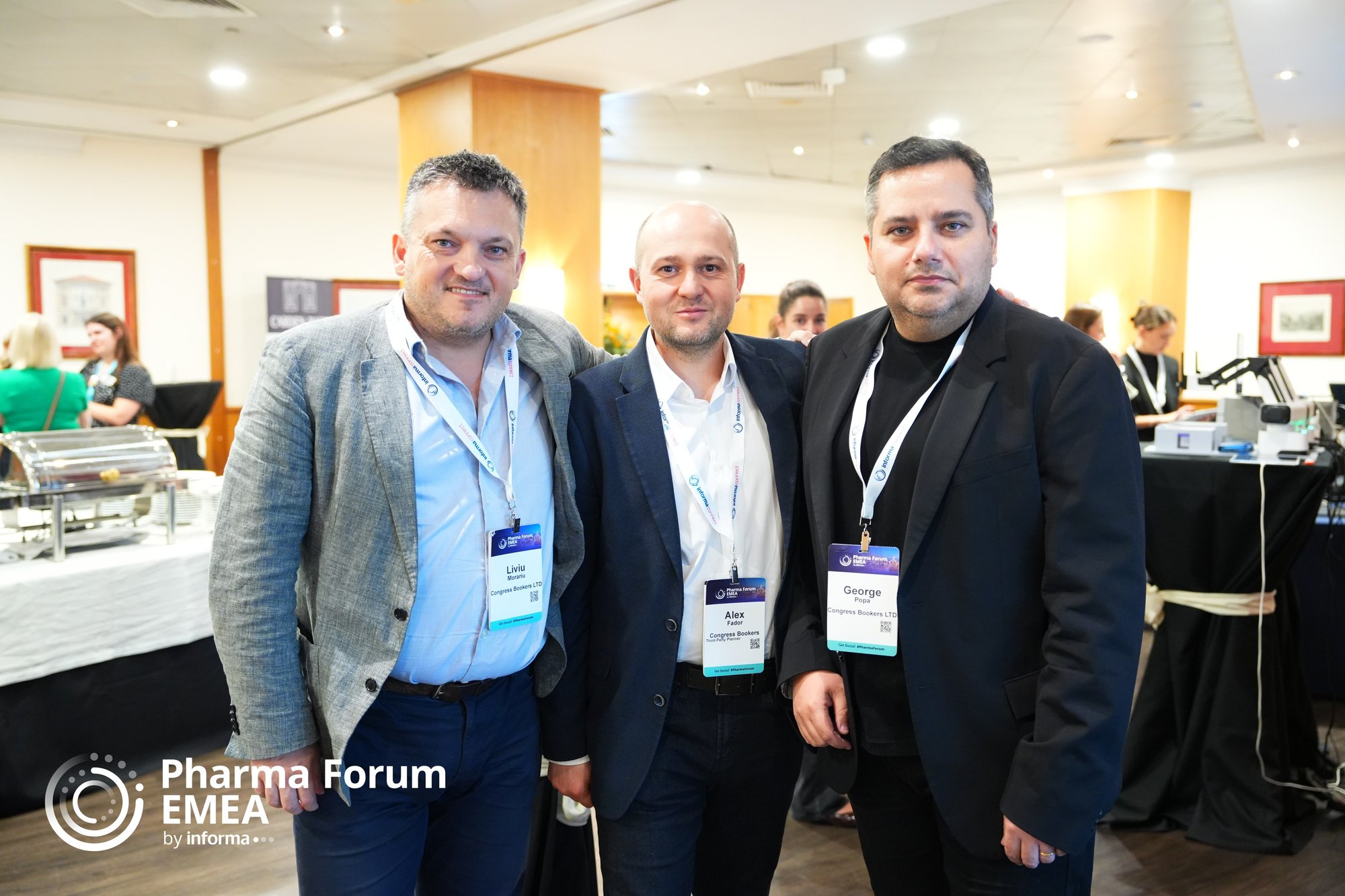
George Popa, Liviu Morariu and I spent three days in Lisbon at Pharma Forum EMEA 2026, from 2 to 4 November. We followed the sessions, talked with corporate meeting planners and agencies, and spent time with the partners and suppliers who were there with us. One message ran through the whole programme: pharma clients want more than a list of hotels. They want a partner who helps them make a decision they can explain and defend.
Here is what we heard in Lisbon, what we are taking back to our teams, and what it means for the pharmaceutical companies and agencies we work with. I have focused on the ideas rather than on individual speakers.
Pharma Forum EMEA 2026 at a glance
Pharma Forum EMEA is an annual conference for meeting, congress and event professionals in the life sciences industry. The 2026 edition took place in Lisbon from 2 to 4 November, in a city we know well from congress work.
The agenda covered compliance, HCP engagement, AI, the patient voice, procurement and how to measure the value of a congress. Speakers came from pharmaceutical companies, agencies and event suppliers, and many sessions were built around practical examples, from invoice checks to agenda design.
CongressBookers was represented by:
- George Popa, Director of Operations
- Liviu Morariu, Director
- Alex Fador, Business Development & Reservations Director
From booking rooms to helping clients decide
The clearest shift in Lisbon was in the role of the partner. Clients increasingly value a partner who understands the purpose of the event, compares the options, points out the risks and explains why one solution fits better than another.
Execution does not become less important. Speed, accuracy, market knowledge and smooth logistics are still the base. Advice is a layer on top of them, not a replacement.
For us, a proposal should therefore carry more than rates: availability, total cost, conditions, risks, fit with the client's requirements and the alternatives. For a pharma meetings team or an agency, a well-documented choice is also easier to approve internally.
The room rate is only the start
Sourcing hotels and venues for pharma groups is much more than sending the same email to several hotels. The sessions on sourcing described the work behind a good shortlist:
- Turning the client's policy, contract requirements and event objectives into a clear request for proposal.
- Keeping versions aligned between the client's form, the hotel's offer, the framework contract and any local annexes.
- Coordinating a negotiation with several decision-makers on the client side.
- Comparing total value: accommodation, food and beverage, meeting space, AV, taxes, concessions and the risk in the terms.
A useful comparison reads like this: Hotel A has the lower rate, but its prepayment and cancellation terms are stricter. Hotel B costs more but gives the group more flexibility. Taxes for Hotel A still need to be confirmed. That is the level of detail clients need to see the trade-off before they decide, whether the brief is a congress room block or a single advisory board.
Compliance starts at the offer, and people stay accountable
Compliance was at the centre of the agenda. HCP meetings and congress delegations bring together healthcare professionals from many countries, each with its own code. Every hotel night, transfer and registration fee paid for an HCP is a transfer of value that has to be recorded and, in most markets, disclosed. In Europe, the EFPIA Code of Practice sets the baseline for events and hospitality, and national codes add their own detail.
One session set out a simple division of work between AI and people:
- AI can: draft, summarise, spot patterns and run repetitive checks.
- People verify: comparisons, scenarios, risk signals and recommendations.
- People decide: ethical questions, exceptions, acceptance of risk and the final decision.
That matches how we work. A compliance note on an offer helps, but a tick is not an approval. Rules differ by client, country and event, and missing information should stay visible. The standard we are working towards is a clear record for every relevant decision: the rule applied, its source and version, the data used, any exceptions and the person who reviewed it. Interpretation and approval stay with the client's compliance team.
Invoices and reconciliation: transparency the client can see
One of the most practical sessions came from a corporate meetings team and its agency partner. They showed how an invoice check can start from the invoice and the purchase order, then add the budget and the tax rules. In their example, which was fictional, the check confirmed matching fields, flagged missing information and found a difference between the invoice and the order, with a proposed next step.
The lesson for suppliers is clear. Reconciliation is no longer only an internal efficiency. Pharma clients are starting to expect it as transparency they can see.
For a congress group, that means one clear line from first offer to final invoice:
- What was quoted and contracted.
- What changed along the way.
- What was delivered, including room-night pick-up against the allocation and no-shows.
- What the hotel or supplier invoiced.
- What is invoiced to the client or reconciled with the agency.
Differences should appear as items to resolve, not disappear inside a total. This is the direction we are taking with our own systems and reporting.
Another session showed a prototype for checking HCP expense reimbursements, built in six hours at a hackathon. It shows how quickly a first version can be built. It does not show that a tool is secure, accurate or compliant enough for real HCP and bank data. That part takes much longer, as it should.
AI, one workflow at a time
AI came up in almost every session, and the advice was consistent: introduce it gradually. Start with small, low-risk tasks, build trust, define use cases for each role, then roll out and measure. Four conditions came before any expansion: training, an acceptable use policy, data protection and human review.
We follow the same approach. We add one workflow at a time, each with an owner, the data it may use, the result we expect and how we will measure it. HCP personal data does not go into AI tools without a legal basis and a data processing agreement, and meeting recordings or transcripts are used only when authorised.
AI makes us faster, clearer and more consistent. Relationships, decisions and delivery stay with our people.
What clients pay for when work gets faster
If AI makes the work faster, what are clients paying for? The question was asked directly in Lisbon, and time-based fees are under pressure. The answer we heard, and agree with, is expertise: negotiated rates, local knowledge, judgement on risk and support on the ground.
For clients, a practical test is to ask what a partner brings that a search engine cannot. That is how we want to be judged: the speed of our answers, the quality of our comparisons, how we manage risk, how transparent we are and how the delegates experience the trip.
Different pharma companies, different priorities
One framework presented at the forum grouped pharma companies by maturity:
- Emerging pharma: speed, agility, launch readiness and the ability to scale.
- Mid-sized companies: growth, standardisation, efficiency and governance.
- Enterprise: consistency, data, compliance and global optimisation.
It is a working framework, not a rule for every company. We use it as a starting point for the questions we ask at the beginning of a project, so the proposal answers what matters to that client.
More congresses competing for the same delegates
More congresses now compete for the same delegates and the same sponsorship budgets. This was an observation rather than a measured trend, but it matches what we see when we plan delegations: overlapping dates, seasonal peaks and strong pressure on hotels near the main venues.
That makes timing more important. The congress date and destination are only the start. The audience, overlaps with other events, the size of the congress, the season and the pressure on hotels all affect when to request an allocation and on what terms.
Designing the experience around objectives
Several sessions looked at how delegates experience a meeting. One presentation proposed a framework built on relevance, immersion and active participation, supported by compliance and solid data. The practical ideas were simple: a strong start and finish, one memorable moment, relevant surprises, active participation and a clear action after each session.
The patient voice also had its place on the agenda, with sessions on accessibility, inclusion and the limits on patient involvement. For logistics, that means planning for people, not only for badges: accessible rooms and step-free transfers confirmed in writing, shorter walks between hotel and venue, quiet spaces and clear dietary information.
For meetings and advisory boards, we bring these ideas into the first conversation about the client's objectives, not only about space and logistics. Anything we propose for a pharma client is checked against the client's rules and the applicable codes.
Skills that matter more
The sessions on careers and teams highlighted commercial judgement, critical thinking, an understanding of technology, communication and adaptability. These skills grow through exposure to real sourcing and risk decisions, practice on real briefs, coaching and time in different functions.
For our team, that means training on real examples reviewed by an experienced colleague. It also means judging quality by accuracy, the issues spotted, the explanation given and the result for the client, not by the number of offers processed.
What this means for our clients
For pharmaceutical companies and agencies planning congress delegations and meetings with us, the practical points are:
- Proposals that compare total value and terms, not only room rates.
- A clear source behind each important figure and condition.
- Compliance questions raised at offer stage, with the decision left to your compliance team.
- Itemised costs per delegate and a clear reconciliation when the group closes.
- AI used carefully, one workflow at a time, with people accountable.
- The same team, the same on-site support and the same point of contact.
What comes next
We are following up on the conversations from Lisbon with clients, partners and suppliers. Our first step is to test these ideas on a real hotel sourcing case, comparing our usual process with a decision file that brings total cost, terms, sources and risks together. I will share what we learn once we have a few congresses behind us.
Thank you to the partners and suppliers who were in Lisbon with us, and to everyone who shared their experience in the sessions and between them. Our trade show calendar lists the next events where you can meet the CongressBookers team.
Frequently asked questions
What is Pharma Forum EMEA?
Pharma Forum EMEA is an annual conference for meeting, congress and event professionals in the life sciences industry. Its sessions cover compliance, HCP engagement, AI, patient engagement, procurement and how to measure the value of congresses.
When and where did Pharma Forum EMEA 2026 take place?
It took place from 2 to 4 November 2026 in Lisbon, Portugal.
Who represented CongressBookers at Pharma Forum EMEA 2026?
George Popa, Director of Operations; Liviu Morariu, Director; and Alex Fador, Business Development & Reservations Director.
What were the main takeaways from Pharma Forum EMEA 2026?
Pharma clients expect partners to advise, not only to execute. Hotel sourcing should compare total value, not only room rates. Compliance starts at offer stage, with people accountable for decisions. Reconciliation is becoming transparency that clients expect to see, and AI should be introduced one workflow at a time, under clear data rules.
How does CongressBookers support pharma congress groups and meetings?
We provide hotel accommodation and allocations for congress groups, ground transfers, congress registration, on-site support, and meetings such as advisory boards and satellite symposia. Costs are itemised per delegate and compliance questions are raised early, so the client's team can review them before confirmation.
Planning your 2027 congress delegations?
Send us your congress calendar, dates, expected number of delegates and the support you need at request@congressbookers.com, and we'll come back with hotel options and a clear proposal.
You can also write directly to the team you met in Lisbon:
George Popa, Director of Operations: george@congressbookers.com
Liviu Morariu, Director: liviu.morariu@congressbookers.com
Alex Fador, Business Development & Reservations Director: alex@congressbookers.com